Tottenham Hotspur’s 2-0 victory over Crystal Palace has sparked fresh debate about Premier League refereeing after Jean-Philippe Mateta was sent off following a VAR review.
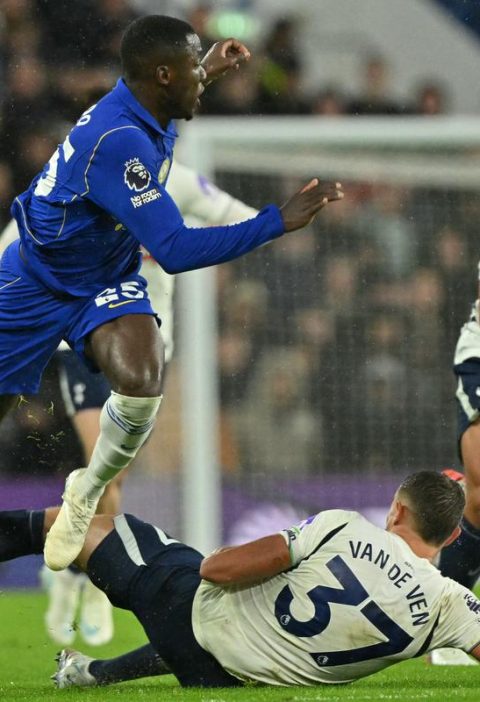
Referee Michael Oliver initially showed the Palace striker a yellow card for a dangerous challenge on Tottenham defender Micky van de Ven. However, after reviewing the footage on the pitchside monitor, Oliver changed his decision and issued a straight red card.
The incident has revived discussions about the consistency of refereeing decisions and the role of VAR in English football.
Michael Oliver Reverses His Initial Decision
The incident occurred early in the match at the Tottenham Hotspur Stadium. Mateta attempted to challenge for the ball but arrived late and caught Van de Ven around the Achilles area with his studs during a sliding tackle.
Oliver, who was close to the incident, initially judged that a yellow card was sufficient punishment.
VAR officials subsequently recommended an on-field review, prompting the referee to examine the incident again. After watching the replay, Oliver decided that the challenge was serious enough to warrant a red card.
Palace were consequently forced to play with ten men for most of the match.
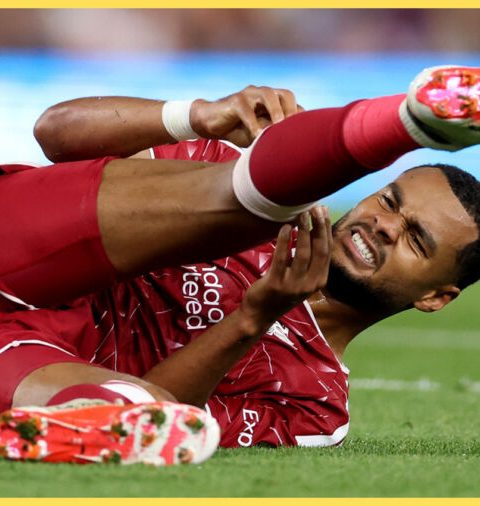
Although Van de Ven escaped a serious injury, the incident raised questions about why the referee initially failed to recognise the seriousness of the challenge.
Keith Hackett’s Previous Criticism of Michael Oliver
The controversy has also brought back memories of former Professional Game Match Officials Limited chief Keith Hackett’s criticism of Oliver following a similar incident in March 2025.
During Crystal Palace’s FA Cup match against Millwall, goalkeeper Liam Roberts made a dangerous challenge that struck Mateta in the head with his studs.
Oliver initially failed to issue a straight red card, but VAR intervened and recommended that he review the incident. After checking the footage, the referee changed his decision and sent Roberts off.
Hackett subsequently criticised Oliver for needing VAR assistance to identify what he believed was an obvious red-card offence.
The former refereeing chief questioned why an experienced official had not immediately recognised the seriousness of the challenge.
That earlier incident has become relevant again because Oliver once more needed a VAR review before dismissing a player involved in a dangerous challenge against Mateta.
However, the article does not establish that Hackett has issued a fresh public statement specifically criticising Oliver’s decision in Saturday’s Tottenham match.
VAR and Refereeing Consistency Under Scrutiny
The latest controversy has reignited the wider debate about whether Premier League referees are making consistent decisions.
VAR was introduced to help officials correct clear and obvious errors, but questions remain about how much responsibility should rest with the referee on the pitch.
Oliver’s initial decision to show Mateta a yellow card suggested that he did not immediately consider the challenge serious enough for a dismissal. His subsequent review, however, led him to reach a different conclusion.
The incident highlights the difficulty of making quick decisions during a match, particularly when the referee may not initially have the best viewing angle.
Nevertheless, consistency remains essential because similar incidents should be judged according to the same standards.
Under football’s Laws of the Game, a player can receive a straight red card for serious foul play when a challenge uses excessive force or endangers an opponent’s safety.
A challenge involving studs making contact with an opponent’s Achilles area can therefore justify a red card, depending on its nature and severity.
Although Oliver’s initial decision attracted attention, the article acknowledges that the eventual dismissal was defensible under the rules.
Tottenham Capitalise on Palace’s Disadvantage
Mateta’s dismissal was a significant setback for Crystal Palace, particularly because it happened so early in the contest.
The striker had recently returned from an injury-disrupted start to the campaign, and his departure forced Palace manager Pierre Sage to adjust his tactical approach with most of the match still to play.
Tottenham took advantage of their numerical superiority and broke the deadlock in the 24th minute.
Mohammed Kudus delivered a corner that found Archie Gray unmarked at the far post, allowing the young midfielder to head home and give Spurs the lead.
Tottenham continued to take advantage of the situation, and Jan Paul van Hecke scored in the 73rd minute to secure a 2-0 victory.
The result gave Roberto De Zerbi’s side their third consecutive Premier League win, while Crystal Palace suffered another disappointing setback.
For Michael Oliver, the match has brought renewed attention to his decision-making and the role of VAR in high-pressure situations.
Ultimately, the red card appears defensible under the serious-foul-play rules. However, the difference between Oliver’s initial yellow card and his eventual red card has ensured that the incident remains a major talking point among football supporters.