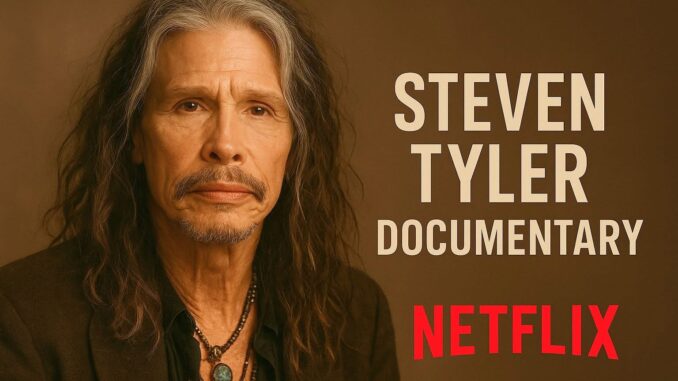
Dream On: The Steven Tyler Story – Netflix’s $7 Million Gamble on Rock’s Eternal Bad Boy
In a move that’s sending shockwaves through the music world, Netflix has reportedly inked a jaw-dropping $7 million deal for Dream On: The Steven Tyler Story, an unflinching documentary that promises to peel back the layers of one of rock ‘n’ roll’s most enigmatic icons. Directed by the Oscar-nominated filmmaker Liz Garbus—known for her raw dives into human fragility in films like What Happened, Miss Simone?—this untitled project (temporarily dubbed Dream On after Aerosmith’s timeless anthem) arrives as the streaming giant’s latest salvo in its escalating war for prestige music docs. With production wrapping just last month and a fall 2025 premiere on the horizon, the film is already generating Oscar whispers and fan frenzy, positioning itself as Netflix’s most anticipated rock biopic since Amy or The Last Dance’s cultural cousin.
But what makes this deal so stunning? At $7 million, it’s not just a purchase—it’s an investment in Tyler’s enduring mystique. Sources close to the production tell me Netflix outbid heavyweights like Apple TV+ and A24 in a heated auction, betting big on Tyler’s ability to draw in boomers, Gen Xers, and even Zoomers discovering Aerosmith via TikTok edits of “I Don’t Want to Miss a Thing.” The price tag covers rights, marketing, and a glossy post-production polish, but insiders hint it’s a steal if the doc captures even a fraction of Tyler’s electric charisma. “Steven’s story isn’t just rock history—it’s American mythology,” one executive quipped. “Rebellion, ruin, redemption. It’s catnip for awards season.”
For the uninitiated—or those who only know Tyler as the scarf-draped judge from American Idol—Dream On chronicles a life that’s as operatic as a power ballad. Born Steven Victor Tallarico in 1948 in New York City’s Bronx, Tyler’s origin story reads like a gritty novel. The son of a classical musician father and a secretary mother, young Steven was a misfit kid with a golden voice and a penchant for trouble. By his teens, he’d traded schoolbooks for drum kits and harmonicas, hustling in the gritty Boston club scene. It was there, in the smoky dives of the early ‘70s, that he met guitarist Joe Perry, sparking the chemistry that birthed Aerosmith. Their 1973 debut album, a raw slab of bluesy hard rock, exploded with “Mama Kin” and “One Way Street,” but it was 1975’s Toys in the Attic that catapulted them to superstardom. Hits like “Sweet Emotion” and “Walk This Way” fused Rolling Stones swagger with Led Zeppelin bombast, making Aerosmith the blueprint for arena rock. Tyler, with his mile-wide mouth, wild curls, and penchant for feather boas, became the ultimate frontman: a shamanic figure who turned stages into sweat-soaked rituals.
The glory years were intoxicating—literally. Aerosmith ruled the ‘70s like demigods, packing stadiums from Madison Square Garden to Tokyo Dome, rubbing elbows with the likes of The Rolling Stones and David Bowie. Tyler’s larger-than-life persona defined the era’s hedonism: the scarves dangling from his mic stand like prayer flags, the primal screams that could shatter glass, the lyrics dripping with lust and longing. Offstage, it was a whirlwind of private jets, groupies, and excess. “We were the Toxic Twins,” Tyler later reflected in his 2011 memoir Does the Noise in My Head Bother You?, nodding to his and Perry’s infamous duo of debauchery. Cocaine-fueled all-nighters, heroin benders that left bandmates nodding off mid-rehearsal—it was the dark underbelly of the dream. By 1979, with Night in the Ruts, the wheels were coming off. Perry quit in a haze of jealousy and addiction; Tyler’s voice, once a thunderclap, frayed from abuse. The band imploded in a storm of lawsuits and relapses, their farewell show a chaotic mess at Worcester’s Centrum Arena.
What follows in Dream On—based on early footage leaks and producer teases—is the gut-wrenching descent. The ‘80s were Tyler’s wilderness years, a blur of solo stumbles and near-death spirals. A 1986 overdose on the West Coast left him clinically dead for minutes, revived only by a frantic friend’s CPR. Rehab stints came and went; a brief, ill-fated marriage to model Cyrinda Foxe crumbled amid custody battles for his daughters, Mia and Liv (the latter of whom would carve her own path as an actress and activist). Aerosmith’s 1984 comeback attempt with Done with Mirrors flopped, dismissed as a desperate cash-grab. Tyler hit rock bottom in 1988, checking into a Minnesota clinic weighing just 130 pounds, his body a roadmap of track marks and regrets. “I looked in the mirror and saw a stranger,” he told Rolling Stone decades later. “The guy who’d screamed for millions was whispering for mercy.”
Yet, true to rock’s phoenix lore, Tyler rose. The band’s turnaround began in 1986 with a raw intervention: Perry and drummer Joey Kramer dragged a strung-out Tyler to a meeting, where he finally surrendered. Enter Tim Collins, the no-nonsense manager who enforced sobriety with an iron fist—firing enablers, canceling tours, even threatening to dissolve the band. It worked. Clean and focused, Aerosmith signed with Geffen Records and dropped Pump in 1989, a monster that birthed “Janie’s Got a Gun” (a harrowing tale of abuse that won a Grammy) and “What It Takes.” But the real resurrection came with 1993’s Get a Grip, fueled by MTV videos starring Alicia Silverstone and a crossover sheen that snagged them younger fans. “Cryin’,” with its iconic angel-wing tattoo reveal, became a staple; “Crazy” oozed sultry regret. By the ’90s close, Aerosmith was grossing $100 million on tour, their Walk of Fame star gleaming under Hollywood lights.
Dream On doesn’t stop at the comeback, though. It delves into Tyler’s reinvention as a multimedia maven. His 2001 Idol stint humanized him, turning the screeching rock god into a wise-cracking mentor who boosted careers like Kelly Clarkson’s. Solo ventures followed: the 2016 country album We’re All Somebody from Somewhere, a bold pivot chronicled in the earlier Netflix doc Steven Tyler: Out on a Limb, where he traded scarves for Stetsons in Nashville. But the film’s emotional core lies in Tyler’s humanitarian pivot. Sober since ‘88, he’s become a fierce advocate, founding Janie’s Fund in 2015 to support girls who’ve survived abuse— inspired by his own song and a lifetime of witnessing trauma. “Music saved me,” Tyler says in a Dream On clip, his eyes misty. “Now I want to save them.” The doc features tearful testimonials from survivors, alongside chats with bandmates Perry (guitar wizard and eternal foil), bassist Tom Hamilton (quiet anchor), drummer Kramer (the heartbeat), and rhythm guitarist Brad Whitford (the unsung glue).
What elevates Dream On beyond standard rock fare? Garbus’s touch: intimate verité footage from Tyler’s vaults—grainy Super 8 of ‘70s benders, Polaroids from rehab, Zoom calls with grandkids. No hagiography here; it confronts the shadows, including 2022’s settled lawsuit alleging misconduct with a minor in the ‘70s (which Tyler denied, calling it a “painful distraction”). Yet, the narrative arcs toward grace: Tyler, now 77, reflecting on fatherhood (to four kids, including actor Chelsea), his 2023 hip surgeries that nearly sidelined Aerosmith’s farewell tour, and a quiet spirituality drawn from Native American roots. “I’m not done dreaming,” he grins in the trailer, strumming a ukulele version of “Dream On.”
Netflix’s timing is impeccable. With Aerosmith’s 2023-2024 retirement tour cut short by Tyler’s vocal woes, fans crave closure. The doc arrives amid a doc boom—think Frida or Will & Harper—but Tyler’s tale feels timeless. Early buzz from Sundance test screenings? Standing ovations and sobs. Critics praise its “visceral honesty,” likening it to The Dirt meets Beautiful Boy. For superfans, it’s catharsis; for newcomers, an entry point to Aerosmith’s catalog (pro tip: start with Toys, end with Just Push Play).
As October 2025 ticks toward release, Dream On isn’t just a film—it’s a reckoning. In an era of fleeting TikTok fame, Tyler embodies resilience: the kid from the Bronx who screamed his way to immortality, fell hard, and got back up, scarves flying. Netflix’s $7 million bet? It’ll pay dividends in streams, Emmys, and maybe even a last hurrah tour. Because as Tyler himself wails, “Dream on, dream on, dream until your dreams come true.” In his case, they already have—and now, we get to witness the magic.
Leave a Reply