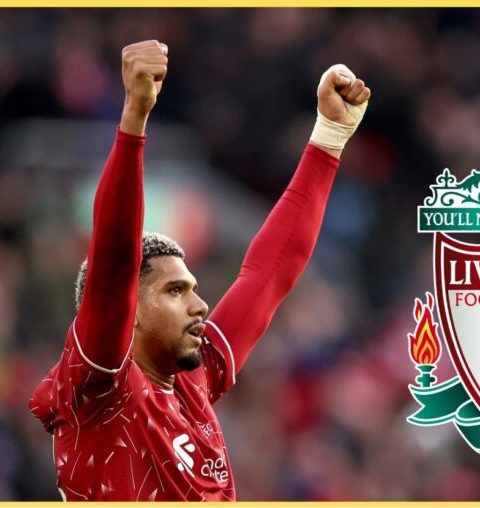
The controversial red card shown to Ryan Gravenberch during Liverpool’s 3-0 defeat to Manchester City has sparked heated debate, with questions being raised about referee Chris Kavanagh’s decision to send off the Dutch midfielder.
Gravenberch was dismissed in the 62nd minute of Sunday’s Premier League clash at Anfield after receiving a second yellow card for a challenge on Manchester City winger Jeremy Doku.
However, the controversy centres on the midfielder’s first booking, which many pundits and former referees believe was harsh.
THE FIRST YELLOW CARD SPARKS CONTROVERSY
Gravenberch received his first yellow card shortly after half-time following a challenge on Manchester City’s Elliot Anderson.
The decision immediately attracted criticism, with several football pundits arguing that the contact was too minor to justify a booking.
Former Liverpool defender Jamie Carragher strongly criticised the decision, describing it as shocking. He argued that the referee appeared to issue the yellow card after believing Anderson had been hurt, rather than judging the challenge itself.
Former Premier League referee Dermot Gallagher also questioned the first booking. He suggested that Kavanagh may have believed Gravenberch had caught Anderson around the knee, when the contact was actually closer to the top of his boot.
Gallagher felt the Liverpool midfielder was unfortunate to receive the initial caution.
WHY THE SECOND YELLOW CARD WAS GIVEN
Despite the criticism surrounding the first booking, the second incident was more difficult to defend.
Gravenberch attempted to stop Doku from launching a dangerous counterattack but failed to win the ball cleanly. Because he had already been booked, the referee showed him a second yellow card, resulting in his dismissal.
Gallagher maintained that the second caution was justified because Gravenberch’s challenge interrupted a promising attacking move.
His argument was that the midfielder should have recognised the danger of committing another foul while already on a yellow card.
The incident therefore created a difficult debate: although the second booking was considered justifiable, many observers believed the first yellow card placed Gravenberch in a vulnerable position.
LIVERPOOL’S PERFORMANCE CHANGED AFTER THE DISMISSAL
Before Gravenberch’s sending-off, the match had been closely contested, with Liverpool attempting to take control of the game at Anfield.
The dismissal changed the balance of the contest, leaving Liverpool with ten players against a Manchester City side capable of exploiting the extra space.
City took advantage almost immediately.
Erling Haaland opened the scoring in the 65th minute, just three minutes after Gravenberch was sent off. Jeremy Doku then doubled the visitors’ advantage in the 68th minute with an impressive finish.
Rayan Cherki completed the scoring in the 78th minute, handing Manchester City a convincing 3-0 victory.
For Liverpool, the timing of the red card made the defeat even more frustrating, particularly because the game had remained goalless before the dismissal.
FORMER REFEREES DISAGREE OVER THE DECISION
The controversy has divided opinion among former officials and football pundits.
While there is considerable agreement that the second yellow card could be justified under the laws of the game, the first booking remains the main source of frustration.
Former Premier League referee Mark Halsey argued that referees should distinguish between careless challenges, which generally warrant a free kick, and reckless challenges, which merit a yellow card.
Former referee Keith Hackett also suggested that the official could have applied a higher threshold for yellow cards in such a high-profile match.
These arguments have added to the criticism of the consistency of refereeing decisions in the Premier League.
WHAT DOES THIS MEAN FOR LIVERPOOL?
Gravenberch’s dismissal could have consequences beyond the defeat itself. A sending-off for two yellow cards normally results in a one-match suspension, meaning Liverpool could be without the midfielder for their next domestic league fixture, subject to the applicable disciplinary rules.
His absence would be a concern for Liverpool, particularly given his importance in midfield.
The incident also raises questions about how Liverpool respond when decisions go against them. Although the red card significantly affected the game, the team must still find ways to remain organised and competitive when playing with ten men.
Liverpool will now need to put the defeat behind them and focus on their next match.
FINAL VERDICT
The biggest talking point is whether Gravenberch should have received his first yellow card in the first place.
If that booking was unnecessary, Liverpool supporters have a legitimate reason to question the decision that ultimately led to the midfielder’s dismissal.
However, the second challenge gave the referee grounds to issue another yellow card because it stopped a promising Manchester City attack.
Liverpool fans, what is your verdict? Was Ryan Gravenberch unlucky to be sent off, or should he have been more careful after receiving his first yellow card?