Roger Federer and Elena Rybakina: The Real Story Behind the Viral “Secret Letter”
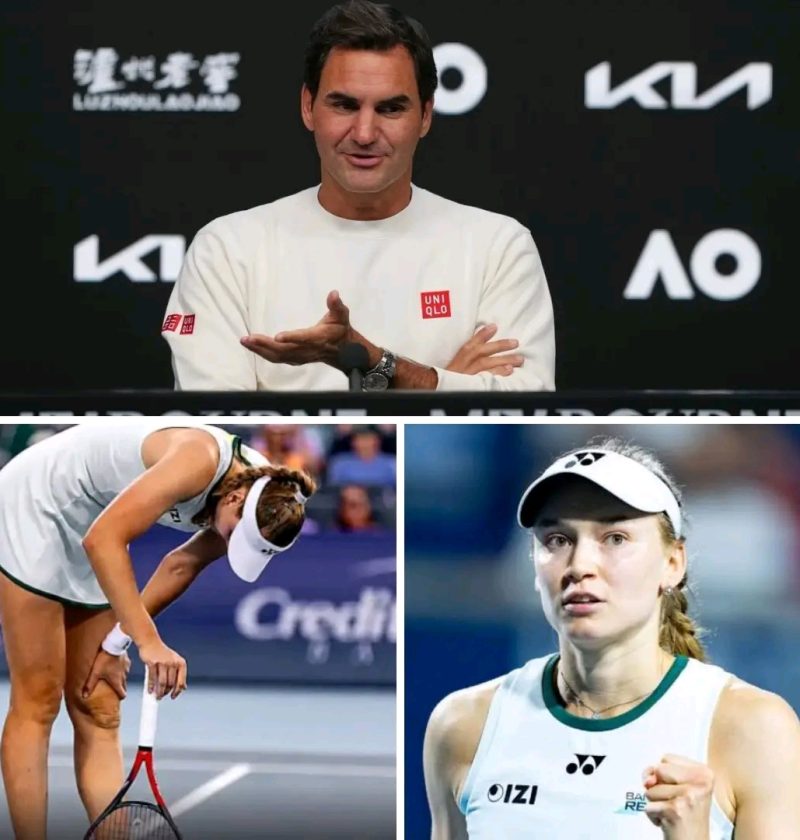
Recent social media posts and questionable sports websites have circulated claims that tennis legend Roger Federer sent Elena Rybakina an emotional “secret letter” after her withdrawal from the Cincinnati Masters. Some versions of the story even claimed that a leaked postscript contained surprising advice from Federer.
However, the article makes clear that there is no evidence that such a letter ever existed. According to the report, the story appears to be another example of sensationalized sports content designed to attract attention, clicks and advertising revenue.
Rybakina’s Cincinnati Injury
The real story concerns Rybakina’s difficult quarter-final against Iga Swiatek at the Cincinnati Masters. The Kazakh star was forced to retire during the opening set while trailing 1–4 after experiencing significant heel pain.
Her withdrawal was particularly frustrating because she has dealt with several physical problems during recent seasons, including illnesses, allergies and various muscle and joint issues. With the US Open approaching, protecting her health was more important than risking a worsening injury.
Why Federer Was Included in the Story
The fabricated story was made more believable by using Rybakina’s genuine admiration for Federer.
Rybakina has spoken positively about Federer throughout her career and has regarded the Swiss great as one of her biggest childhood inspirations. His style, composure and sportsmanship have influenced the way she views tennis.
Federer, meanwhile, has largely maintained a quiet and respectful public profile since retiring in 2022. Although he continues to follow the sport and has praised younger stars, there is no credible evidence that he privately contacted Rybakina with the dramatic message described online.
How the Clickbait Story Was Created
The article argues that the rumor follows a familiar pattern used by modern clickbait websites.
First, two famous tennis personalities are connected. Next, an emotional situation is introduced, followed by claims of tears, a mysterious private message and a supposedly leaked secret. The story is then left with a cliffhanger designed to encourage readers to click on links or watch videos.
The use of phrases such as “secret letter,” “shocking revelation” and “leaked postscript” is intended to create curiosity and emotional reactions rather than provide verified information.
The article also points to the growing use of artificial intelligence and automated content production, which allows low-quality websites and content farms to produce large amounts of sensational material very quickly.
The Bigger Problem: Player Burnout and Injuries
Beyond the false Federer story, Rybakina’s situation highlights a genuine issue in professional tennis: the physical demands placed on elite players.
The tennis calendar requires competitors to travel around the world for much of the year while repeatedly switching between hard courts, clay and grass. Players also face pressure to participate in major tournaments to protect their rankings, prize money and sponsorship opportunities.
For a player like Rybakina, whose game relies heavily on powerful serving and intense movement, maintaining peak physical condition is essential. Recurring health problems can make the demands of the schedule even harder to handle.
Her decision to retire from the Cincinnati match should therefore be viewed as a sensible attempt to protect her health and career rather than a sign of weakness.
A Warning for Tennis Fans
The Federer-Rybakina rumor also demonstrates how quickly misinformation can spread online. Social media algorithms often reward content that generates strong emotional reactions, meaning sensational rumors can travel much faster than carefully verified reports.
Fans are encouraged to check major claims against reliable sources, including official WTA and ATP communications, verified athlete accounts and established sports broadcasters and news organizations.
Claims involving supposedly leaked letters, secret recordings or shocking revelations should be treated with particular caution when no credible source is provided.
Conclusion
The central message is simple: there was no verified secret letter from Roger Federer to Elena Rybakina. The genuine event was Rybakina’s painful withdrawal from Cincinnati because of a heel problem.
Rather than focusing on an invented story, attention should remain on Rybakina’s recovery and the demanding physical challenges faced by professional tennis players.
The episode ultimately serves as another reminder that viral sports stories are not automatically true. Fans should look beyond dramatic headlines and verify information before sharing it, especially when the claims involve major athletes and sensitive issues such as injuries.