Former Premier League Referee Calls for Major VAR Changes After Controversial Tottenham vs Leeds Incident
Former Premier League referee Graham Barber believes football officials could learn valuable lessons from rugby union when it comes to the use of VAR, following the controversial incident involving Tottenham and Leeds United on Saturday.
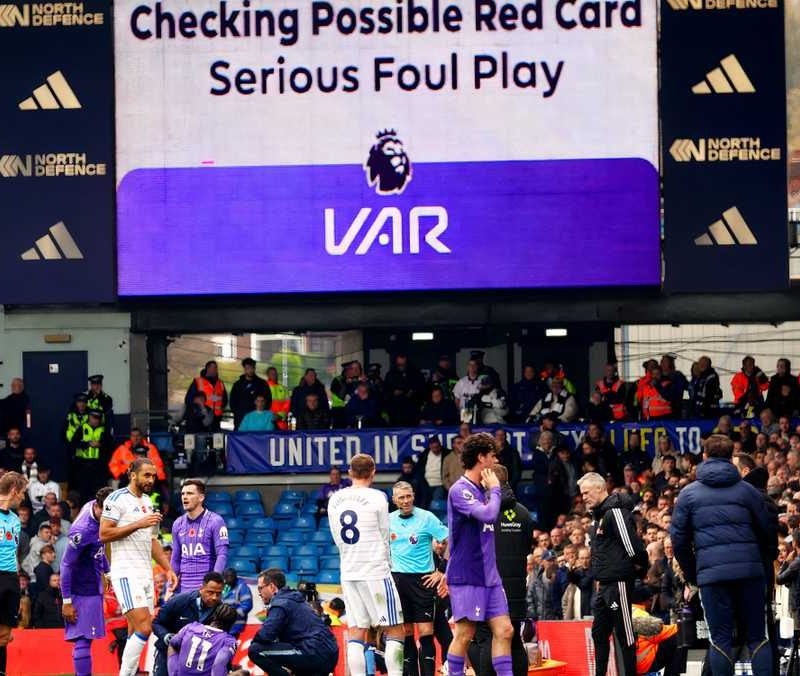
The major talking point at Elland Road was Jayden Bogle’s challenge on Tottenham forward Mathys Tel, in which the Leeds defender appeared to plant his studs on the Frenchman’s Achilles. Despite the severity of the tackle, referee John Brooks awarded only a free-kick.
VAR officials spent more than four minutes examining the incident but ultimately decided against recommending an on-field review. As a result, Bogle escaped without even receiving a yellow card, despite Tel later being forced off with an ankle injury. The Premier League subsequently explained why a red card was not issued.
Speaking to GIVEMESPORT, Barber questioned the consistency of the officiating and insisted that the outcome was unfair, particularly given that Tel was unable to continue after the challenge.
The former official admitted that refereeing decisions will never be perfect, but stressed that consistency is essential to maintaining confidence in the game.
He said the incident left supporters and players uncertain about what decision would follow, adding that there had been several questionable and inconsistent calls during the encounter.
Barber described Bogle’s challenge as extremely poor, reckless and potentially dangerous, arguing that it endangered the safety of the Tottenham forward. He also questioned how a player could leave the pitch injured following such a challenge without the opponent receiving any disciplinary punishment.
Although he acknowledged that whether the tackle deserved a straight red card remains debatable, Barber felt that at the very least, a yellow card should have been shown.
Barber insists referee should have reviewed the incident
Barber was particularly critical of the decision not to send John Brooks to the pitchside monitor after such a lengthy VAR review.
He firmly believes the on-field referee should have been given the opportunity to watch the footage himself and make the final decision.
According to Barber, the referee on the pitch remains the most qualified person to take responsibility for decisions during a match, and he would have wanted to assess the incident personally if he were in Brooks’ position.
He also pointed to rugby union as a potential example for football to follow, highlighting how referees in the sport communicate directly with television match officials (TMO) while reviewing incidents on screen.
Barber noted that the process in rugby is often much quicker and more transparent, questioning why football officials sometimes need several minutes to reach a decision.
He concluded that VAR is still developing and should ultimately help eliminate clear and obvious errors, but insisted that Saturday’s Tottenham-Leeds controversy had raised serious questions about how the technology is currently being used.