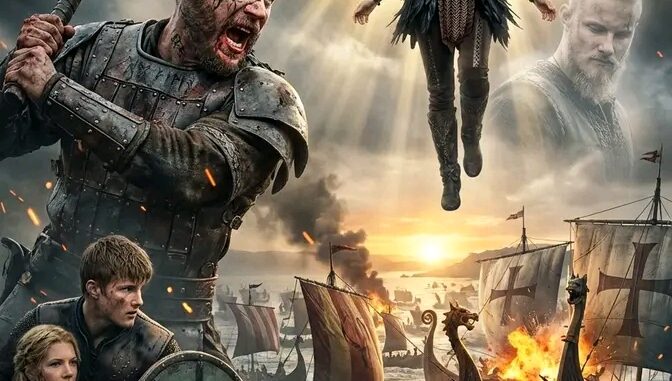
Vikings 2: Valhalla Rising** (2027)
Fifty years have passed since the legendary Ragnar Lothbrok and his sons reshaped the course of history through their daring raids and unyielding spirit. The Viking Age, once a formidable force of conquest and exploration, now teeters on the brink of extinction. Christendom’s relentless expansion, political upheaval, and internal strife have pushed Norse culture to the edge of oblivion. Amidst this turbulent backdrop, a new saga begins—one that will test faith, loyalty, and the very meaning of heroism.
The story opens in 987 AD, a fragmented Europe where the Norse world is increasingly marginalized. The Vikings’ once fearsome ships now lie abandoned or sunk, and their gods are whispered about only in secret, replaced by the growing influence of Christianity. The film introduces us to the aging but fiercely determined **Eirik Haraldsson** (Tom Hardy), a legendary Viking warrior who once led daring raids across Europe. Now, disillusioned and haunted by the loss of his family and homeland, Eirik seeks one final voyage—an expedition to reclaim the honor of his ancestors and forge a new legacy.
Meanwhile, in the icy fjords of Norway, **Kara Bjornsdottir** (Katheryn Winnick), a fierce shieldmaiden and Eirik’s trusted confidante, grapples with her own internal conflict. Once a devout follower of the old gods, she has seen her people succumb to the Christian faith, which she views as both a spiritual threat and a cultural betrayal. Her brother, **Leif Bjornsson** (Alexander Ludwig), a young and ambitious warrior eager to prove himself, pushes for a bold raid into Christian territories, seeking to restore Viking dominance.
As tensions rise, Eirik and Kara cross paths with **Bjorn Ironside**, a charismatic and ambitious chieftain who embodies the new Viking ethos—balancing reverence for their ancestors with pragmatic survival. Bjorn’s vision is to carve out a new Viking identity in a changing world, rallying those still loyal to the old ways while navigating the treacherous waters of political alliances.
The central conflict revolves around a clandestine council of Viking leaders and Christian rulers, vying for control over the remnants of the Norse lands. Eirik uncovers a sinister plot: a coalition of Christian monarchs planning to eradicate the last pockets of pagan resistance altogether. This revelation propels him into a reckless quest to rally the remaining Viking clans, igniting a new war that could spell the end of the Viking age.
Meanwhile, Kara’s faith is tested when she encounters a Christian missionary, **Brother Aiden**, who seeks to convert her through both compassion and coercion. Her journey becomes one of internal struggle—wrestling between her loyalty to her heritage and the possibility of spiritual salvation or reconciliation.
As the film progresses, the Vikings launch a series of daring raids, each more brutal and desperate than the last. These battles showcase not only their martial prowess but also the cultural clash between the old gods and the new faith. The narrative explores themes of faith, identity, and the inexorable march of history—questioning whether heroism lies in conquest or in the acceptance of change.
In a pivotal sequence, Eirik leads a daring assault on a Christian monastery, a symbolic act meant to ignite the dying embers of Viking resistance. The raid is brutal and costly, leaving Eirik wounded but unbowed. His conviction deepens—the battle is no longer just for land or treasure, but for the soul of his people.
Kara’s storyline reaches a climax when she faces her brother Leif during a decisive battle. Leif, driven by youthful idealism, advocates for a new alliance with Christian powers, believing it the only way to ensure their survival. Kara, steadfast in her old gods, opposes him fiercely, leading to a tense confrontation that underscores the ideological divide tearing their world apart.
Amidst the chaos, Bjarne, a cunning Christian diplomat, emerges as a pivotal figure, attempting to broker peace and sway Viking loyalties. His manipulations add layers of political intrigue, exposing the fragility of alliances and the cost of betrayal.
The climax of the film takes place at the legendary **Valhalla Mountain**, where Eirik and his remaining followers make a final stand. Surrounded and outnumbered, they prepare for a fight that will determine the future of their culture. As the battle rages, Eirik faces off against a Christian warleader in a brutal duel—symbolizing the clash between old and new, faith and violence.
In the aftermath, the Vikings are defeated but not broken. Eirik, grievously wounded, survives long enough to pass the torch to a new generation—one that must forge its path amid the ruins of the old world. Kara, having embraced her faith and heritage, becomes a symbol of resilience, embodying the enduring spirit of her people.
The film closes with a somber reflection on the fall of the Viking age. Though their era has ended, the legends of the Vikings—of bravery, faith, and rebellion—continue to inspire future generations. The final scene hints at a new dawn—one where the cultural and spiritual legacy of the Norse will live on, even as the world around them changes forever.
**”Vikings 2: Valhalla Rising”** is a sweeping epic of war, faith, and identity. It captures the twilight of the Viking age, blending historical grandeur with personal stories of heroism and sacrifice. Through Tom Hardy’s gritty portrayal of Eirik, Katheryn Winnick’s fierce Kara, and Alexander Ludwig’s ambitious Leif, the film explores the enduring human spirit amid the inexorable tides of history—an ode to the warriors who sought to carve their mark on the world, even as it was slipping away.
Leave a Reply